
Free electricity plans have spread quickly. The federal Solar Sharer Offer went live on 1 July 2026 across New South Wales, South Australia and South East Queensland. Victoria has its own version due on 1 October. Half a dozen retailers now sell free window plans of their own, some of them four hours long.
They all share one design decision. The free window sits in the middle of the day, because that is when rooftop solar floods the grid and wholesale prices collapse. Which means the free power arrives at the exact hours when most houses are locked and empty.
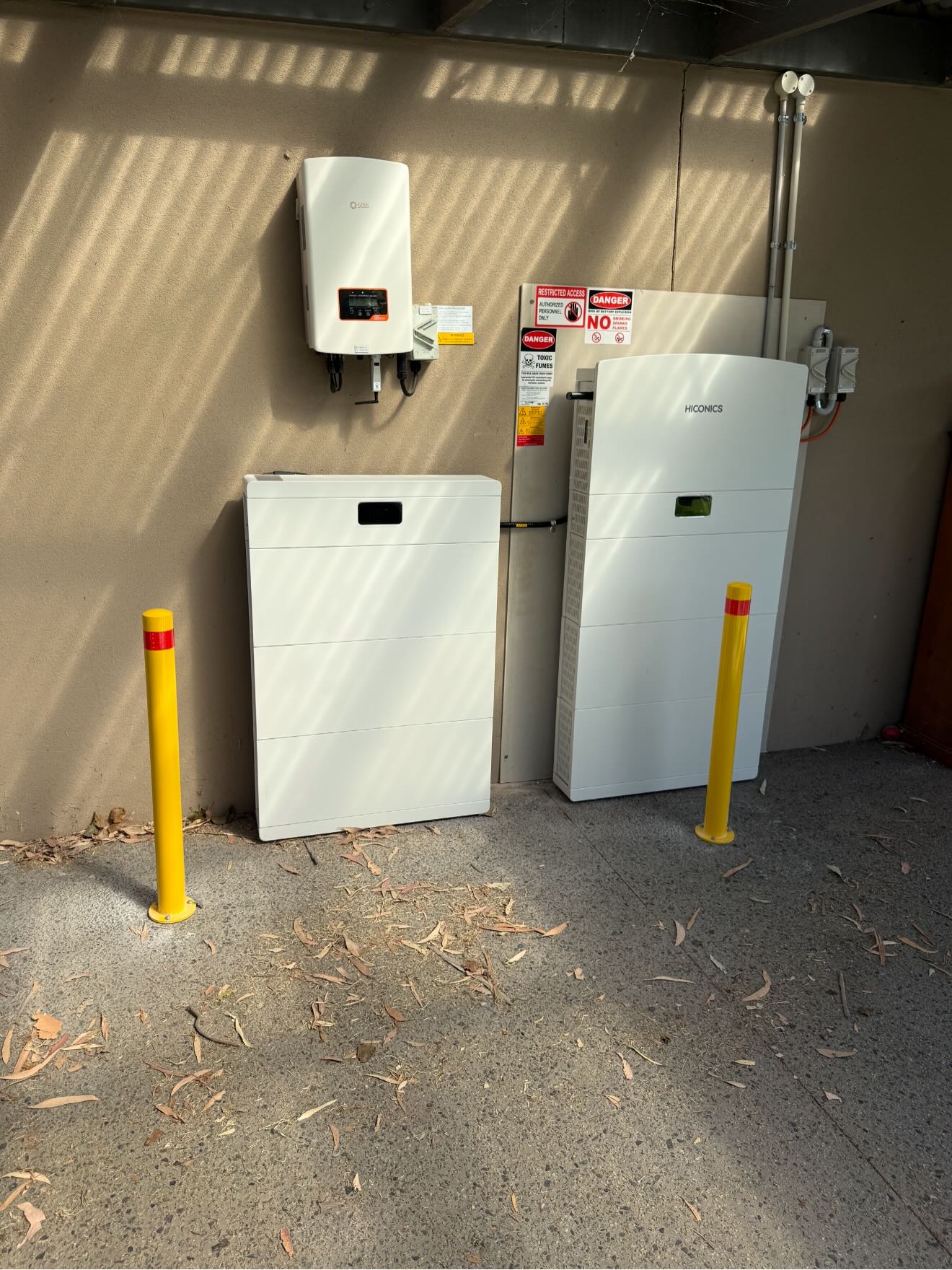
That is the whole problem in one sentence. And it is the reason a battery changes the value of these plans more than any other single thing you can do.
What you can actually shift without a battery
Plenty, and it is worth doing first. On a timer or a smart plug you can move the dishwasher, the washing machine, the pool pump and the EV charge into the window from a phone at work. If your hot water is on a normal circuit rather than a controlled load, you can heat it at midday too. In summer you can pre-cool the house before you get home.
What you cannot shift is the part of the bill that actually hurts: the evening. Cooking, heating, hot showers, lights, television, everyone home at once. On most time of use plans that period runs from about 4pm to 9pm, and it is priced accordingly. The regulated Victorian scheme's recommended peak rate reaches around 50 cents per kWh in the AusNet zone. Diamond Energy's published Ausgrid fact sheet lists a peak of 63.65 cents. Those are not accidents. Free midday power is paid for by more expensive power at every other hour, and the regulators say so plainly.
So without storage, a free window plan asks you to move what you can and then pay a premium on everything you could not. Households that shift a lot come out ahead. Households that cannot come out behind. The Essential Services Commission said as much in its own assessment: shifting enough usage may be challenging for most households, and customers who cannot shift enough could end up worse off.
What the battery actually does
A battery is a way of moving electricity through time. That is the entire product. Everything else is packaging.
With a free window plan, the sequence is simple. During the free hours the battery charges from the grid at zero cents per kWh. It sits full through the afternoon. When the peak rate starts at 4pm, the house runs off the battery instead of the grid. You have taken energy that cost nothing and spent it during the most expensive hours of the day.
The window stops being three hours. It becomes however long your battery lasts.
Rough arithmetic on a 15 kWh battery
Take a 15 kWh system, which is the size we most often fit for a household with a quarterly bill between $400 and $800. Say it holds about 13 kWh of usable energy once you account for the losses in charging and discharging, because no battery gives back everything you put in, and roughly a tenth disappearing as heat is a fair rule of thumb rather than a promise.
If those 13 kWh displace grid power you would otherwise have bought at a 45 cent peak rate, that is about $5.85 in a day. Over a quarter, if it happened every single day, it lands somewhere near $530.
Now the honest part. It will not happen every single day. Some days your peak use is smaller than the battery. Some days you draw the battery down before the peak even starts. Some of that energy would have come from your own solar anyway and cost you nothing regardless. The number is an illustration of the mechanism, not a forecast of your bill, and anyone quoting you a guaranteed saving from a free window plan is guessing.
The caps are rarely the constraint
Every free window plan limits how much you can take. The government schemes cap it at 24 kWh a day. Flow Power allows 32 kWh. GloBird and CovaU publish 50 kWh, and GloBird measures its allowance across the whole billing period rather than day by day, so a heavy day costs you nothing as long as a light day balances it.
A 15 kWh battery charging from empty fits inside every one of those caps with room to spare, and still leaves you 9 kWh of headroom under the tightest one to run the house at the same time. Sizing up to 27 kWh is where the 24 kWh government cap starts to bite, and where the higher capped retailer plans start to matter. It is a real consideration, but it is a sizing conversation rather than a reason not to bother.
When a battery gains you much less than you would think
This section matters more than the one above it, and most people selling batteries leave it out.
If you already have plenty of solar
The Victorian regulator makes this point directly: battery owners may gain little from a free power period, because a well run battery is already avoiding expensive grid periods. If your roof produces more than your house uses at midday, your battery is already filling up for free from your own panels. The free window is not giving you a second free charge, it is giving you a slightly cheaper way to top up on the days your solar underperforms.
That is still worth having. In a Melbourne winter, on a run of grey days, the grid window fills the battery when the roof cannot. It just is not the transformation it is for a house without solar.
If you have no solar at all
This is the interesting case, and it runs opposite to what people assume. You do not need solar panels to take a free electricity plan. Both government schemes are explicitly open to households without them. A battery plus a free window, with no panels involved at all, is a genuine strategy: charge from the grid for nothing at midday, run the house off it at night.
Whether it beats installing solar as well is a different question, and usually it does not, because panels plus a battery installed together attract both sets of incentives and only one set of install costs. But it is a real option for a roof that cannot take panels.
If the rest of the plan is bad
A free window is one line in a contract. Check the rest of it before you switch.
- The feed in tariff. AGL states it pays no feed in tariff at all on its Solar Sharer Offer. If you export a lot of solar, losing that can wipe out the value of the free window entirely.
- The peak rate. This is what you are trading. Get the actual cents per kWh for your distribution zone, not the marketing page.
- Controlled load. Excluded from the free window on every plan we have checked. If your hot water is on a controlled load circuit, it keeps costing you right through the free hours.
- The daily supply charge. Payable every day regardless, including days you use nothing.
Every plan compared, with the catches. We keep a running comparison of every free electricity offer in Australia, ranked, with the risk flags and a direct link to each retailer's actual rates rather than its marketing page.
Can your battery actually do this?
Charging a battery from the grid on a schedule is not automatic. Some systems will only ever charge from solar unless you change a setting, and a few older installs cannot be told to charge from the grid at all. Before you switch plans, three things need to be true.
- The inverter supports scheduled grid charging. Most modern hybrid inverters do, including the FoxESS systems we install, but it usually has to be enabled and the times entered manually.
- The schedule matches your plan's window. This sounds obvious and it is where people lose money. If your plan runs 11am to 3pm and the inverter is set to 11am to 2pm, you have thrown away a quarter of the free hours. Worse, if you get the window wrong in the other direction you are buying grid power at full rate to fill a battery.
- The window is confirmed in writing. Retailers do not always agree with themselves. GloBird currently publishes 11am to 3pm on three pages and 10am to 2pm on its own terms and conditions. Get the hours from the retailer in writing before you programme anything.
If you are on a plan already and you are not sure whether your battery is set up for it, that is a fair thing to call an electrician about. It is a settings change, not a new install.
The order we would do it in
- Find out what your peak rate would be. Not the free hours, the peak. That is the number that decides whether the plan works for you. Use the rates links on our comparison page, or check Victorian Energy Compare if you are in Victoria and Energy Made Easy everywhere else.
- Shift what you can for free. Timers on the dishwasher and washing machine cost nothing and tell you how much of your usage is genuinely movable.
- Size the battery to your evening, not to the cap. The question is how much power your house uses between 4pm and 9pm, because that is what the battery has to cover.
- Check the feed in tariff and the controlled load before you sign anything.
What we would quote you
For a household in Melbourne's south east with a quarterly bill between $400 and $800, we usually size at 15 kWh. Here is the sizing guide we work from, with the maximum available rebate already applied.
| Quarterly power bill | Suggested battery size | Approximate price, after max rebate |
|---|---|---|
| Under $800 | FoxESS, 15 kWh | From $4,999 |
| $800 to $1,200 | FoxESS, about 20 kWh | From $8,400 |
| Over $1,200 | FoxESS, 27 kWh or more | From $11,200 |
Approximate only, shown after the maximum available rebate. Prices are subject to change, and any additional items needed on site are extra. Solar panels, if you need them, are quoted separately.
The rebate side of this is worth reading on its own, because it steps down each year. We cover it in the Victorian home battery rebate explained.
The honest bottom line
A free electricity window on its own is a modest saving for a household that can move some of its usage and a real cost for one that cannot. A battery is what converts it into something that covers the expensive part of the day, because it lets you buy at zero and spend at peak.
But it is not free money, and the size of the gain depends on your peak rate, your existing solar, your evening usage and the rest of the contract. If someone gives you a guaranteed annual saving from a free power plan without seeing your bill, they have made it up.
We will read your actual bill, tell you what a battery would realistically cover in your house, and tell you if the answer is that you should not bother yet. Have a look at our home battery and solar page, or get in touch.