If you are weighing up a home battery in Melbourne's south east, the single biggest number in the decision is the rebate. Right now it takes a meaningful slice off the installed cost of an eligible system, and understanding how it works is worth real money. This is a straight guide to the home battery rebate in Victoria: what the program is, who qualifies, why the timing matters, and how we handle the paperwork so you get the reduced price on day one.
What the Cheaper Home Batteries Program actually is
The federal Cheaper Home Batteries Program is the scheme that discounts home battery storage across the country, Victoria included. The discount is tiered by battery size: the first 14 kWh of usable capacity earns the full rate, capacity from 14 to 28 kWh earns a reduced rate, and capacity from 28 to 50 kWh a smaller rate again. On the systems we install, that works out to roughly $4,000 off a 15 kWh battery and up to about $5,900 off a 27 kWh system, as at mid 2026.
That saving is not a voucher you post off and wait on. It is delivered through small-scale technology certificates, the same mechanism that has discounted rooftop solar for years. An accredited installer like DIM applies the certificate value as a discount at the point of purchase, so the price you are quoted already has the rebate built in. You pay the reduced figure, we handle the certificate side, and there is no refund to claw back from a government portal months later.
Who qualifies: battery rebate eligibility in Melbourne
The precise rules sit with the program and they do change, so treat the points below as a guide and let us confirm your exact situation on a free assessment. Broadly, eligibility for the Cheaper Home Batteries Program comes down to a few things.
Solar, new or existing
A battery needs solar to charge from, but the panels do not have to already be on your roof. If you have solar, a compliant battery bolts onto the system you already own. If you do not, we install panels and storage together, which is usually the better value path once both sets of incentives are counted.
Approved products and an accredited installer
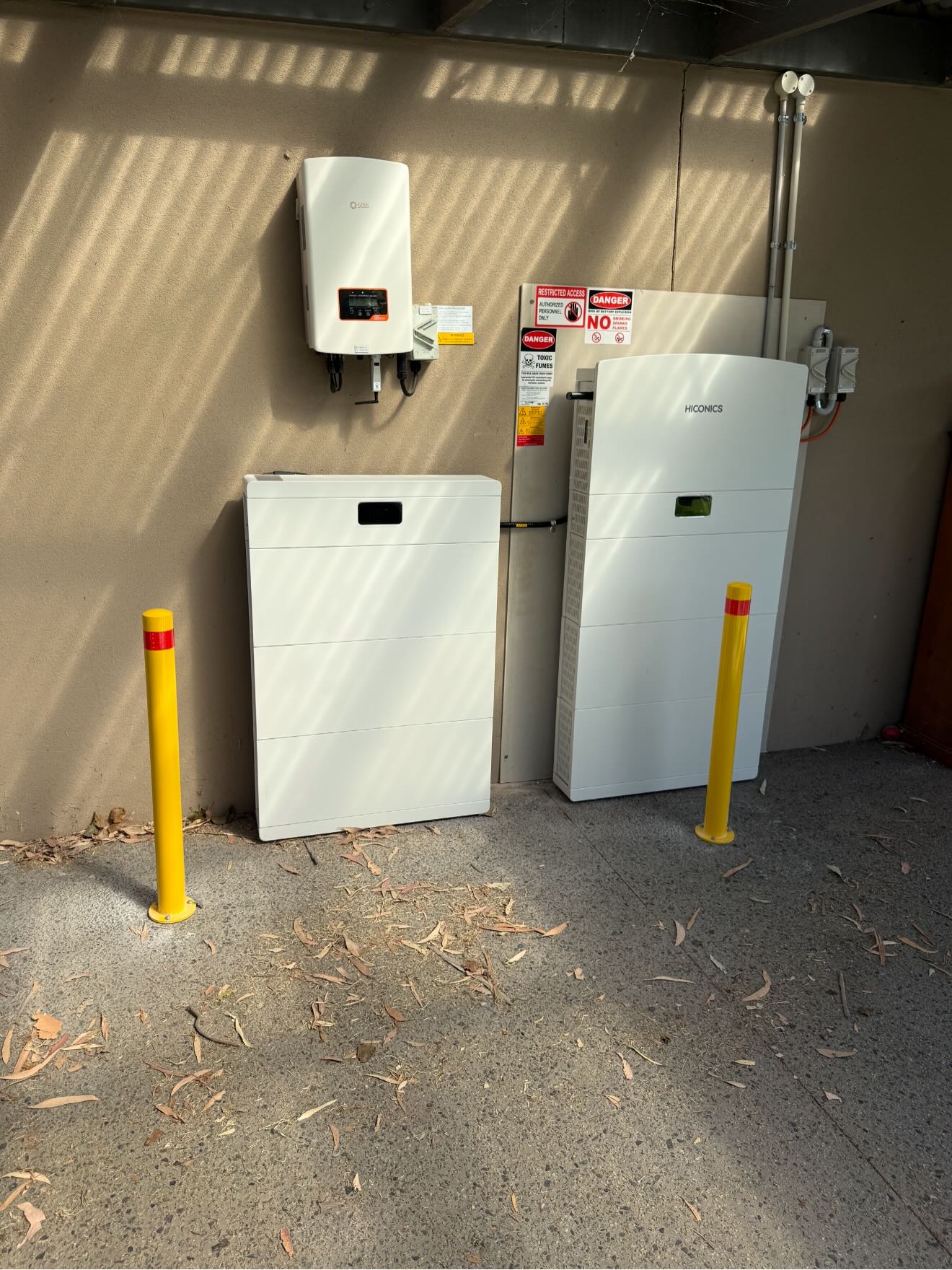
The battery has to be on the Clean Energy Council approved product list, sit within the program's capacity limits, and be installed by an accredited installer to the current battery standard, AS/NZS 5139. The FoxESS systems we install are chosen from that approved list. Your switchboard also has to be up to the job. If it is an older board, we flag a switchboard upgrade before install day rather than as a surprise on it.
Why the rebate steps down each year
Here is the part worth reading twice. The rebate is not fixed forever. The certificate value attached to each system drops on a set schedule as the program winds down toward 2030, so the same battery attracts a smaller discount the longer you wait.
We do not run countdown timers or invent a deadline, because you do not need one. The maths is simply this: the same battery installed this year attracts a larger discount than the identical battery installed next year. If a battery is already on your plan, waiting rarely pays. If it is not, that is fine too, and a free assessment will tell you honestly whether now is your moment or whether it makes sense to hold off.
Stacking the battery rebate with solar
If you are adding panels at the same time as storage, the two incentives stack. Solar panels earn their own small-scale technology certificates based on system size and location, and the battery earns its discount under the Cheaper Home Batteries Program. Installed together, the combined saving off a solar and battery package is larger than doing either job alone, and you only pay for one visit, one set of access equipment and one switch on. It is the reason we so often recommend doing both at once for homes that do not yet have solar.
A worked example
Say you are a typical Bentleigh household with a quarterly power bill somewhere between $400 and $800. Based on that usage we would usually size you at 15 kWh of storage, enough to carry the evening peak and most of the overnight load. Here is how that sits against the wider sizing guide we use, showing the approximate installed price with the maximum rebate already applied.
| Quarterly power bill | Suggested battery size | Approximate price, after max rebate |
|---|---|---|
| Under $800 | FoxESS, 15 kWh | From $4,999 |
| $800 to $1,200 | FoxESS, about 20 kWh | From $8,400 |
| Over $1,200 | FoxESS, 27 kWh or more | From $11,200 |
Approximate only, shown after the maximum available rebate. Prices are subject to change, and any additional items needed on site are extra.
For that 15 kWh FoxESS system, the rebate is already taken off the price above. Almost all of 15 kWh sits inside the full rate tier, so the discount is around $4,000, applied straight to your quote rather than chased later.
The exact figure depends on the certificate value on the day and the specific product you choose, which is why we put a real number in front of you rather than a range, once we have seen your bill and your board. No two homes land in exactly the same spot.
How DIM handles the rebate for you
On a free on site assessment we read your actual power bill, size the system, check your switchboard and roof, confirm the products against the approved list, and give you a clear cost breakdown with the rebate already deducted. Same local team from quote to switch on, and the same team on the phone if you ever need us afterwards.
We do the paperwork, all of it. You never register for a portal, chase a certificate agent, or wait on a refund. The discount is applied upfront, so the price on your quote is the price you pay.
The honest bottom line
Government rebate programs change. Rates, thresholds, approved products and eligibility rules can all shift with little notice, and every figure on this page is a guide as at mid 2026, not a guarantee and not financial advice. Before you commit, we confirm in writing exactly what applies to your address and your chosen system.
If you want that confirmation, or you simply want to know whether a battery stacks up for your home yet, talk to us. Read more on our home battery and solar page, or get in touch and we will give you a straight answer.