If you have ever stood at your fuse box in the dark, wondering why the whole house dropped out the moment the kettle and the heater ran together, this guide is for you. The switchboard is the one part of your electrical system every single circuit passes through, and in a lot of South East Melbourne homes it is also the oldest and least loved. Here is how to tell whether yours is genuinely due for a switchboard upgrade, what forces the decision, and what the job actually costs, without the fear tactics.
Start with a two minute self check
You do not need to be an electrician to spot a board that is living on borrowed time. Open the cover, keep your hands clear of anything inside, and look for these:
- Ceramic fuses. Round porcelain holders with a strip of fuse wire inside, instead of switches. This is the single clearest sign the board predates modern safety gear.
- No safety switches (RCDs). Look for switches with a small "T" or test button. No test button anywhere on the board means there is nothing protecting you from a shock, only the wiring from overload.
- Breakers that trip every week. The odd trip is normal. A circuit that drops out every time two appliances run together is a board sitting at its limit, telling you so.
- Flickering or dimming lights. Lights that dip when the air conditioner or oven kicks in point to loose connections or overloaded circuits, and both start at the board.
- A board that is warm to the touch or buzzing. Warmth, a faint hum, or a hot plastic smell means connections are cooking. This one is urgent: stop resetting and call an electrician.
- A home built before the 1990s that has never been upgraded. If your house is that age and nobody has ever touched the board, assume it is due until an electrician proves otherwise.
Tick one of these and it is worth a look. Tick two or more and an old fuse box replacement should move up your list.
Why it actually matters
The reason this is more than paperwork comes down to what a safety switch does. A safety switch, or RCD, constantly compares the electricity flowing out on a circuit with the amount flowing back. The instant some of it leaks to earth, through a frayed cable, a faulty appliance, or a person touching a live part, it cuts the power in around 30 milliseconds. That is faster than a shock can take hold of you, which is exactly why safety switches save lives.
Older boards predate that technology entirely. A ceramic fuse only reacts to overload: too much current for too long melts the fuse wire and protects the cable in the wall from overheating. It does nothing when electricity finds a path through a person, because to the fuse that looks like a perfectly normal, small load. That is the gap a switchboard upgrade closes, and it is why we fit a safety switch to every circuit, not just the power points.
The triggers that force the decision
Plenty of people know their board is old and quietly live with it for years. What usually forces the upgrade is adding load the old board was never built to carry:
- Adding an EV charger. A car charger is one of the biggest sustained loads a home ever draws, and it needs its own protected circuit. Almost every install starts with a board that can handle it. See our guide to EV charger installation.
- Adding a battery. Batteries connect through a compliant board with capacity to spare, so an upgrade is often step one of a home battery and solar install rather than an afterthought.
- Induction cooking. Swapping gas for an induction cooktop adds a heavy dedicated circuit that an old fuse board simply has nowhere safe to put.
- A big renovation. Once you open walls, add rooms, or move the kitchen, the wiring rules require the new work to meet current standards, and in practice that means the board comes along too.
In every one of these cases, bolting new load onto a tired board is a false economy. Upgrade once, and everything you add afterwards lands on a safe, modern base with room to grow.
What an upgrade involves, and what it costs
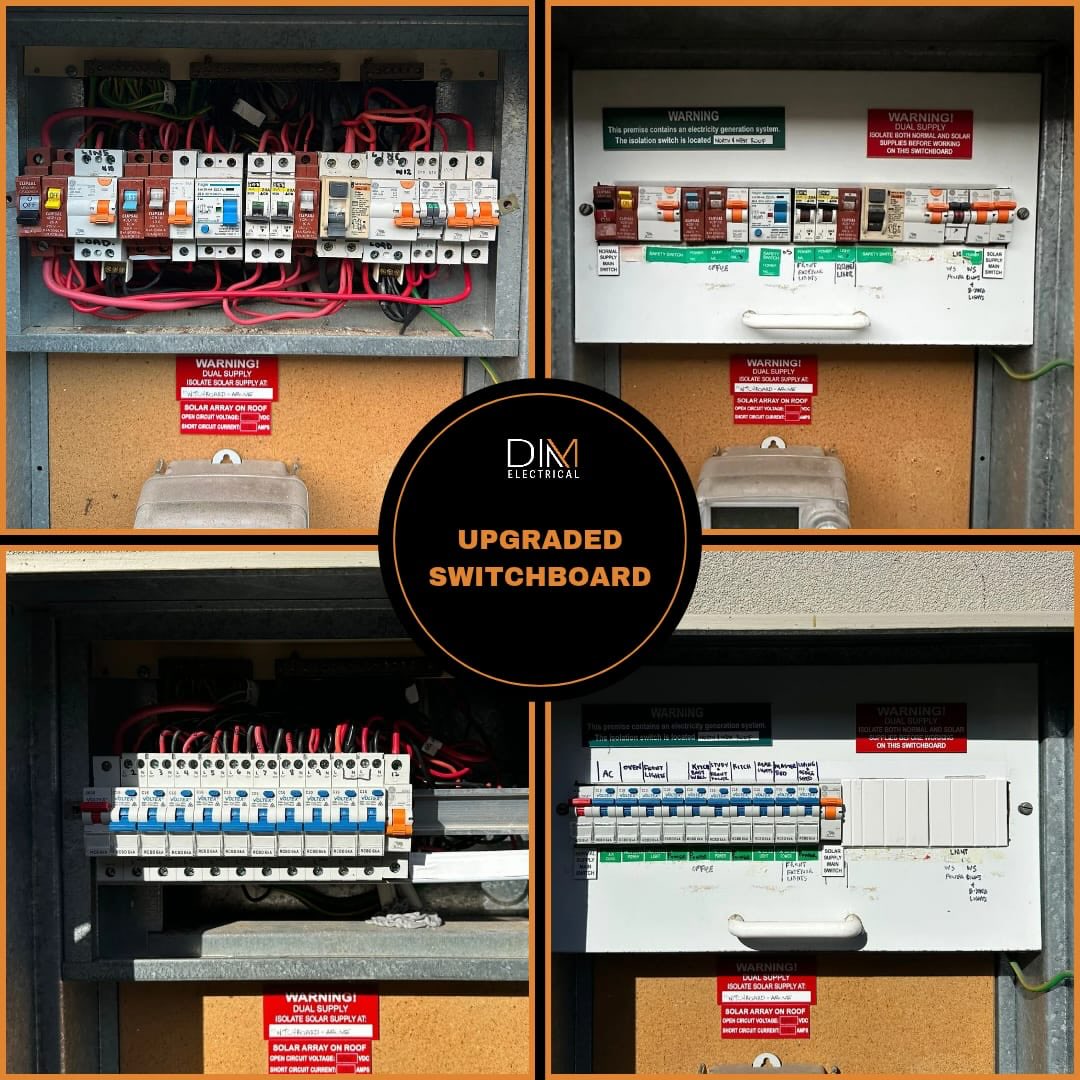
A proper switchboard upgrade is more than swapping a few parts. On a typical DIM job we fit safety switches across every circuit, replace ceramic fuses with correctly sized circuit breakers, tidy and test the wiring, and label each circuit so anyone in the house can find the right switch in seconds. We also check the board has spare ways for whatever you plan to add next, so you are not paying twice.
Most upgrades land between $800 and $3,000. A straightforward fuse box replacement in a smaller home sits at the lower end. A full rebuild with extra circuits, asbestos backing panel removal, or mains work sits toward the top. You get a fixed written quote before anything starts, and it does not move once we begin: no hourly surprises, no "while we were in there" line items you never agreed to.
The power is off for part of the day while we work, so we plan the outage window with you in advance and keep it to hours, not days. Most homes have their power back on the same afternoon, and the board comes back tidier, safer, and ready for the next decade.
What compliance looks like
When the job is done properly, you walk away with two things that matter well beyond the day itself. The first is a Certificate of Electrical Safety, the official document confirming a licensed electrician has installed and tested the work to Australian standards. Keep it somewhere safe, because you will want it at sale, insurance, and rental compliance time. Under the safety switch requirements that apply in Victoria, rental properties in particular are expected to have working RCDs in place, and that certificate is your proof the work was done right.
The second is a clearly labelled board, with every circuit named. It sounds like a small thing until the first time you need to isolate one room without blacking out the whole house at 10 pm on a Sunday. A tidy, labelled board is the difference between a quick flick of the right switch and a torch lit guessing game.
Want a straight answer on your own board?
Tell us about your home in 60 seconds and we will tell you whether a switchboard upgrade is due now, soon, or not yet. Honest advice and a fixed quote. If your board is fine as it is, we will happily say so.
Not sure where your board sits?
That is exactly what a free assessment is for. Send a photo of your board or book a look, and a licensed A-Grade electrician will tell you straight whether it needs doing now, soon, or not at all. No pressure and no scare tactics, just a clear read on where your home stands.
Read more on our switchboard upgrades service page for the full detail on what is included and how the day runs, or get in touch and we will take it from there.